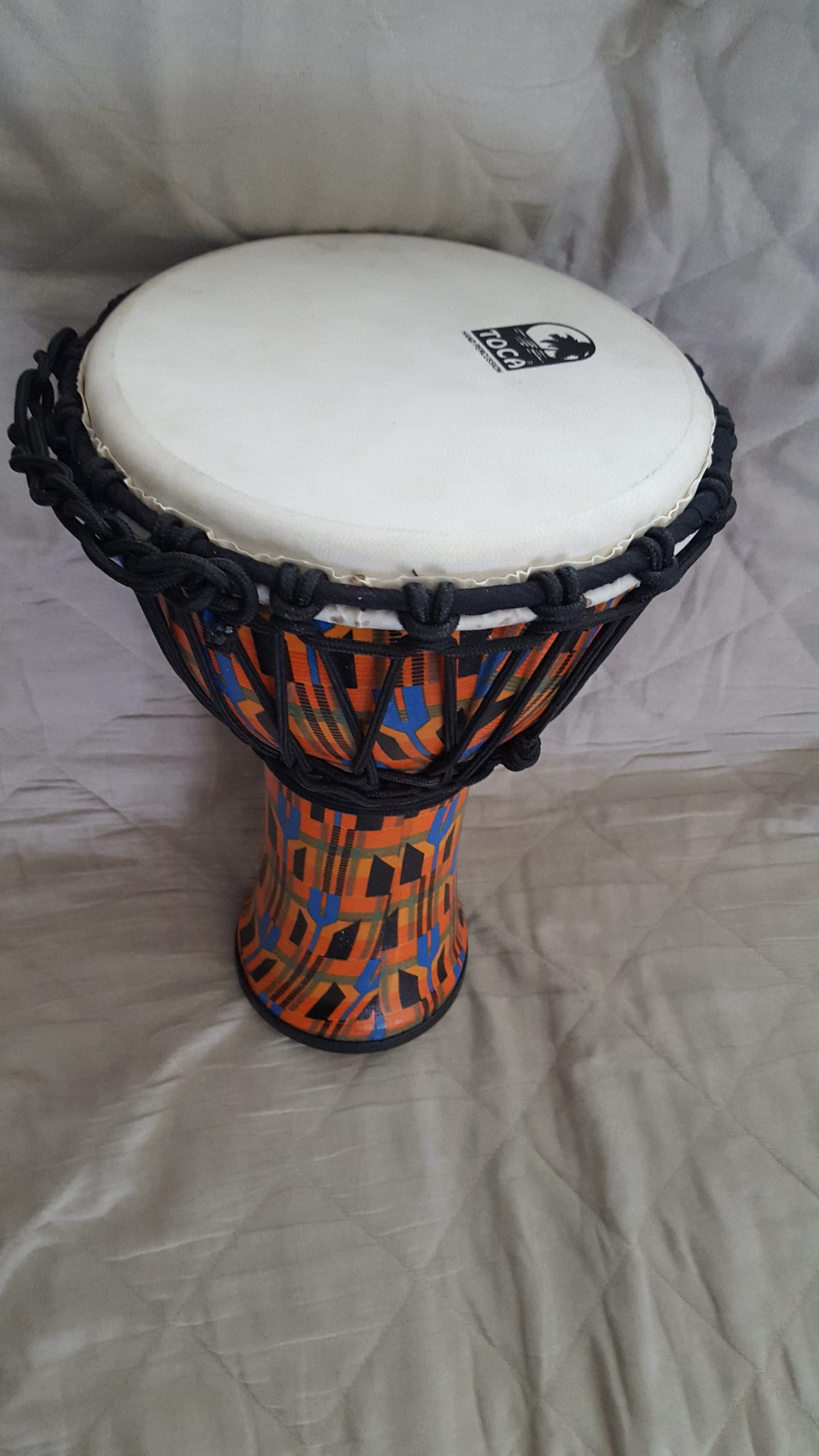
Discover the Djembe
The Djembe is an exciting early childhood music resource that introduces children aged 0–6 to the vibrant rhythms of West Africa. This rope-tuned drum originated in Mali and Guinea, where the Numus people — skilled woodcarvers and musicians — first crafted and played it. Its deep, resonant sound and hands-on playing style make it one of the most engaging instruments for young children.
How is the Djembe Made?
Craftspeople carve the Djembe from a single piece of hardwood, shaping it like a goblet. They stretch an animal skin across the top and secure it with a system of ropes and rings. Tightening the ropes raises the pitch of the drum — a fascinating process that children love to see and hear explained.
How Do You Play It?
Players strike the Djembe with their bare hands. Different hand positions and striking techniques produce three distinct tones — the bass, the tone and the slap. Children are naturally drawn to drumming, making the Djembe a brilliant instrument for rhythm activities, movement and creative expression in early childhood settings.
A Drum That Travelled the World
The Djembe’s influence spread across West Africa over many centuries, reaching Senegal, Ivory Coast and beyond. In the mid-20th century it gained popularity in Western countries through touring African music and dance groups. Today it is one of the most recognised world instruments in multicultural music education.
The Djembe in A Swag Full of Instruments
The Djembe features in Through the Streets of Cairo and The Drum Song — two tracks that get children moving, clapping and exploring rhythm. It is a wonderful instrument for introducing African musical culture to children aged 0–6.
Experience the Sound of the Djembe Click here.


